
Quick Answer: How to Spend 7 Days in Paris
A perfect 7-day Paris itinerary balances iconic landmarks with neighborhood exploration. Spend days one through three hitting the Eiffel Tower, Louvre, and Montmartre. Dedicate days four and five to the Musée d’Orsay and a day trip to Versailles. Use your final two days for local life in Le Marais, the Latin Quarter, and a relaxing Seine River cruise.
This 7-Day Paris Itinerary helps first-time visitors experience the best attractions and neighborhoods without feeling rushed.
Introduction
Paris tops bucket lists for good reason — world-class art, stunning architecture, and incredible food all in one city. This guide cuts through the overwhelm with a logical, day-by-day schedule designed to minimize transit time and maximize enjoyment. Whether traveling solo, as a couple, or with family, this 7-day Paris itinerary gives you a stress-free, memorable week.
Quick Travel Snapshot
| Feature | Details |
| Best Time to Go | April to June, September to October |
| Ideal Duration | 7 Days |
| Estimated Daily Budget | $150–$350 per person |
| Currency | Euro (€) |
| Language | French (English widely spoken in tourist areas) |
| Primary Transit | Metro, Walking |
Best For:
- First-time visitors
- Couples
- Art & history enthusiasts
- Food lovers
Not Ideal For:
- Extreme budget backpackers
- French countryside exploration
- Off-grid adventure travel
Why Visit & Best Time
Paris offers cultural depth few cities can match — from the grandeur of the Louvre to the cobblestone alleys of Montmartre.
- Best Overall: May–June. Long sunny days before the peak summer rush.
- Best Weather: June–September. Warm evenings perfect for Seine-side picnics.
- Cheapest: November–February. Hotels drop significantly, but days are short and cold.
- Least Crowded: January–March. More space in museums, though some may have reduced hours.
💡 Pro Tip: Check the French public holiday calendar before booking. Long weekends (“ponts”) flood museums and parks with local crowds.
How to Reach Paris
By Air: Most international travelers arrive at Charles de Gaulle (CDG), while Orly (ORY) is closer to the city and serves many European routes. To avoid taxi queues and navigate Paris more easily after a long flight, book a private airport transfer from Charles de Gaulle Airport to central Paris in advance.
By Train: The Eurostar connects London St Pancras to Paris Gare du Nord in just over two hours — often faster than flying once airport security is factored in.
By Bus: FlixBus offers budget routes from neighboring European countries. Prices are low; travel times are long.
By Car: Avoid driving into Paris. Traffic is heavy and parking is expensive and scarce.
Book flights 3–4 months ahead to secure the best airfare deals. Compare Flight Prices
Protect your trip with Travel Insurance Coverage that includes medical emergencies, trip cancellations, flight delays, and lost baggage.
Where to Stay in Paris
Your neighborhood shapes your entire trip.
- Le Marais (3rd/4th): Best for first-timers. Central, flat, and packed with cafes.
- Saint-Germain-des-Prés (6th): Best for couples. Romantic and walkable, though pricier.
- Montmartre (18th): Best for atmosphere, but hilly and further from central sights.
| Hotel | Category | Price | Best For |
| Hôtel Caron de Beaumarchais | Budget-Mid | $$ | Families, First-timers |
| Hôtel des Saints Pères | Mid-Range | $$ | Couples |
| Hôtel Plaza Athénée | Luxury | $$$$ | Luxury couples |
💰 Hotels located within 10 minutes of major metro hubs can cost 20–30% less while still offering easy access to Paris’s top attractions. Compare hotel prices and find the best deals here: Find the Best Hotels in Paris.
How to Get Around
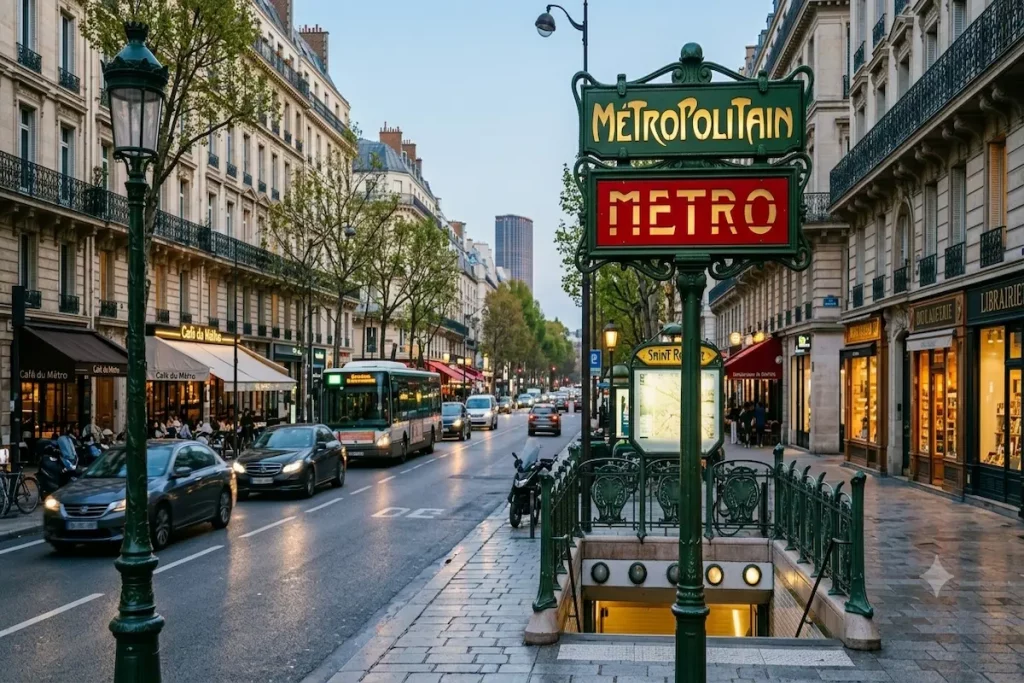
Paris is highly walkable, but the metro handles longer distances efficiently. Buy a reusable Navigo Easy card at any station, it’s replaced the old paper ticketing system for loading individual tickets or day passes.
| Transport | Cost | Best For |
| Metro | $2.25/ticket | General sightseeing |
| RER Train | $2.25–$11 | Versailles, CDG airport |
| Bus | $2.25/ticket | Scenic routes |
| Taxi/Uber | $15–$40 | Late nights, heavy luggage |
| Walking | Free | Le Marais, neighborhood exploring |
🚇 Purchase a carnet of 10 metro tickets to save money on transportation during your stay. For more money-saving tips, check out our How Much Does a Paris Trip Cost? Complete Budget Guide.
Top Things to Do in Paris
| Attraction | Time Needed | Est. Cost |
| Eiffel Tower | 2–3 hours | $27–$30 |
| The Louvre | 3–4 hours | $18 |
| Musée d’Orsay | 2–3 hours | $17 |
| Montmartre & Sacré-Cœur | Half day | Free (church) |
| Palace of Versailles | Full day | $22 (palace) |
| Seine River Cruise | 1 hour | $17 |
Eiffel Tower: Book timed entry tickets at least 60 days ahead — walk-up slots sell out fast. Go in the late afternoon to watch the city light up.
The Louvre: Focus on the Denon Wing rather than attempting the whole museum. Enter via the Carrousel du Louvre underground mall to skip the pyramid line.
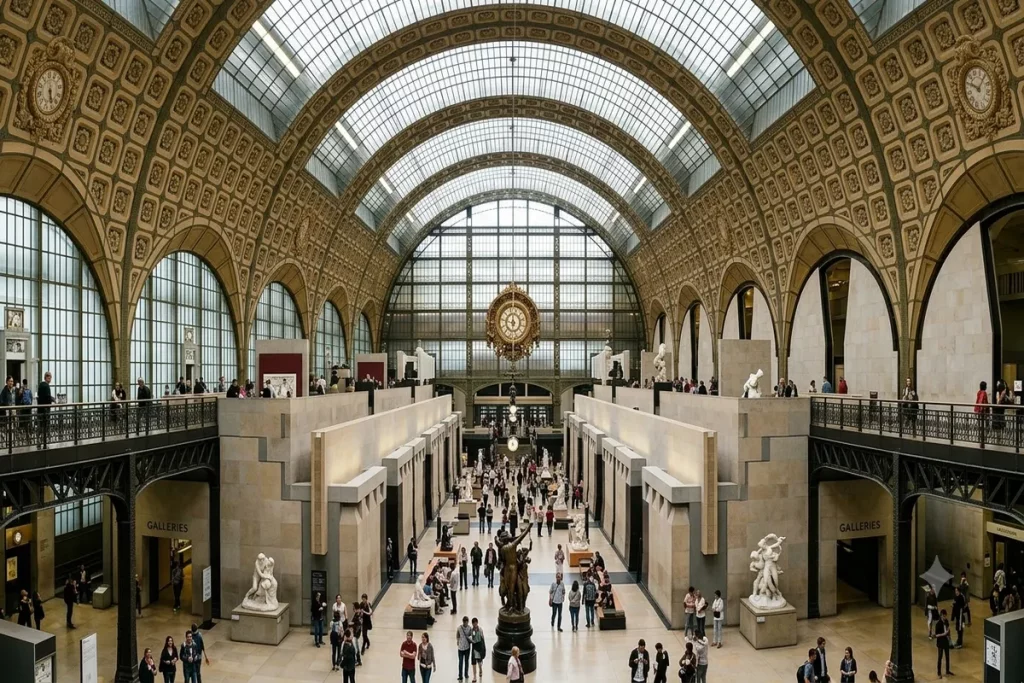
Musée d’Orsay: More manageable than the Louvre and houses the world’s finest Impressionist collection inside a stunning former railway station.
Book skip-the-line tickets here: Skip-the-Line Paris Attraction Tickets.
For a shorter trip, see our 3-Day Paris Itinerary.
Best Photo Spots in Paris
- Trocadéro Square: The classic Eiffel Tower shot. Arrive by 8 AM for crowd-free frames.
- Pont Alexandre III: Paris’s most ornate bridge. Shoot at golden hour with the gilded statues reflecting in the Seine.
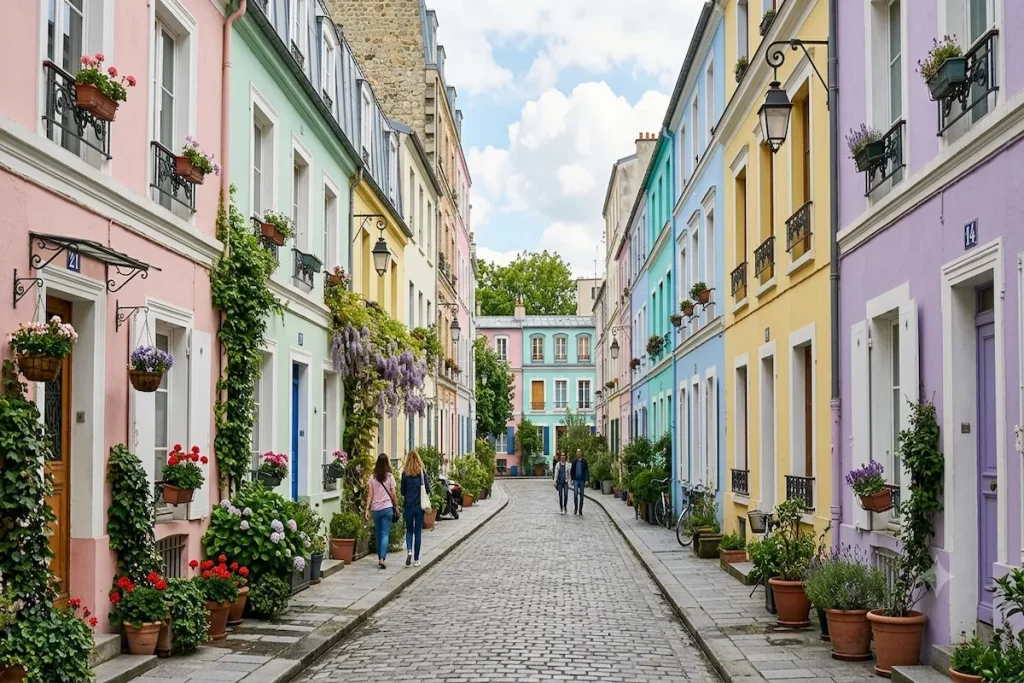
- Rue Crémieux: A hidden pastel-colored street unlike anything else in Paris. Best photographed in the early morning.
Follow this 7-Day Paris Itinerary day by day to maximize sightseeing and minimize travel time across Paris.
The 7-Day Paris Itinerary
Day 1: The Iconic Skyline & Seine
Morning: Check in, grab a croissant from a boulangerie marked Artisan Boulanger (a legally protected designation guaranteeing fresh, on-site baking), and get your bearings on foot.
Afternoon: Head to the Eiffel Tower. Book the second-level elevator ticket and walk down to skip the long descent line. The Trocadéro viewpoint is a 15-minute walk from the tower base — worth doing for photos first.
Evening: Take a one-hour Seine River cruise at sunset. Dinner in the 7th Arrondissement — aim to sit down around 8–8:30 PM, when local restaurants hit their stride.
⚠️ Never buy Eiffel Tower tickets from street vendors. Buy only from the official website or authorized partners.
Day 2: Royal Art & Historic Heart
Morning: The Louvre. Enter via the Carrousel du Louvre underground mall to avoid the pyramid queue. Stick to the Denon Wing — Winged Victory, Venus de Milo, and the Mona Lisa — rather than attempting the whole museum.
Afternoon: Walk through the Tuileries Garden to the Musée de l’Orangerie for Monet’s giant Water Lilies — a calmer experience than the Louvre. Explore the Galerie Vivienne, a 19th-century covered arcade lined with antique bookshops.
Evening: Stroll the Palais-Royal, a quiet local square with striking black-and-white columns. Dinner in the 1st Arrondissement.
Day 3: Bohemian Charm in Montmartre
Morning: Metro to Abbesses. Walk up via Rue Lepic rather than taking the funicular — the village streets are far more rewarding. At Sacré-Cœur, the stairs beside the funicular move faster than the queue.
Afternoon: Browse Place du Tertre where artists paint outdoors. Visit the Musée de Montmartre for a look at the neighborhood’s bohemian history. Keep belongings close in the tourist-heavy square.
Evening: Dinner at a bistro on a quiet side street off the main square. Walk around to the back of Sacré-Cœur for a crowd-free panorama of Paris.
Day 4: Impressionists & The Left Bank
Morning: Musée d’Orsay. Head straight to the top floor for Monet, Renoir, and Degas. Hit the Van Gogh section first thing — it gets congested quickly.
Afternoon: Cross the river to the Latin Quarter. See the Panthéon exterior (burial site of Voltaire and Marie Curie) and wander the lively student streets.
Evening: Relax in the Luxembourg Gardens — pull up one of the famous green metal chairs by the pond. Dinner in the Odéon neighborhood for a great mix of brasseries and modern French cuisine.
Day 5: Royal Extravagance at Versailles
Morning: RER C train from central Paris to Versailles (~45 minutes). Arrive at opening time to walk the King’s State Apartments and Hall of Mirrors before shoulder-to-shoulder crowds set in.
Afternoon: Explore the palace gardens. The grounds are massive — expect 5–8 miles of walking. Rent a golf cart or bicycle to reach Marie Antoinette’s Petit Trianon estate comfortably.
Evening: Train back to Paris. Keep dinner light and close to your hotel after a full day on your feet.
⚠️ Versailles is closed on Mondays. Garden ticket pricing also changes seasonally — confirm before you go.
Day 6: Local Life, Food & Hidden Gems
Morning: Le Marais. Walk the medieval streets and visit Place des Vosges, the oldest planned square in Paris. Grab lunch at the Marché des Enfants Rouges, the city’s oldest covered food market, with affordable international and French stalls.
Afternoon: Canal Saint-Martin. This tree-lined canal is where Parisians spend their Sundays. Grab a sandwich, sit along the water, and watch boats pass through the locks. The vibe is completely different from the historic center.
Evening: Dinner in Le Marais — try L’As du Fallafel for some of the best falafel in Paris, or pick from the neighborhood’s many French bistros.
Day 7: Gothic Glory & Farewell
Morning: Île de la Cité. See the ongoing restoration of Notre-Dame Cathedral from outside, then walk a few minutes to Sainte-Chapelle — its 13th-century stained glass is spectacular on a sunny mid-morning. Cross to tiny Île Saint-Louis for a Berthillon ice cream cone.
Afternoon: Final souvenir shopping along the Champs-Élysées or near the Opera House. Browse the Galeries Lafayette rooftop for a free panoramic city view.
Evening: Farewell dinner at a classic Parisian brasserie. A glass of Champagne is a fitting send-off.
Paris Food Guide
- Steak Frites: The classic bistro order — look for Entrecôte or Bavette on the menu.
- Croissants & Pain au Chocolat: Always eat fresh in the morning from an Artisan Boulanger.
- Duck Confit: Slow-cooked, crispy-skinned duck leg — the definitive French technique dish.
- Savory Galettes: Buckwheat crepes with ham and cheese make a perfect, budget-friendly lunch.
- French Onion Soup: Ideal for chilly evenings, topped with melted Gruyère.
💰Café Tip: Ordering your espresso standing at the bar (au comptoir) costs less than a terrace table. When seated, your table is yours until you ask for the bill (l’addition, s’il vous plaît).
Paris Budget Breakdown
| Category | Budget | Mid-Range | Luxury |
| Accommodation | $50 | $150 | $400+ |
| Food & Drink | $40 | $80 | $200+ |
| Transit | $10 | $20 | $50+ |
| Attractions | $15 | $40 | $100+ |
| Total/Day | $115 | $290 | $750+ |
7-Day Totals (excluding flights): Budget ~$800–$900 · Mid-Range ~$2,000–$2,200 · Luxury $5,000+
Common Mistakes to Avoid
- Trying to see everything. Prioritize quality over quantity — attraction fatigue is real.
- Eating next to monuments. Walk at least three blocks from the Eiffel Tower or Louvre for better quality and fair prices.
- Not making dinner reservations. Popular bistros book out days in advance.
- Skipping “Bonjour.” Always greet shopkeepers and servers with Bonjour before asking anything — skipping it reads as rude.
- Visiting Versailles on Monday. The palace is closed. Verify the schedule before booking your RER ticket.
Safety Tips
- Pickpockets on Line 1: The metro line connecting major sights is notorious for theft. Keep your phone and wallet in a front zip pocket.
- The Brass Ring Scam: Someone “finds” a ring, asks if it’s yours, and demands money. Ignore and keep walking.
- Fake Petitions: Women with clipboards asking you to sign charity forms distract while an accomplice picks your pocket. Walk past without engaging.
Packing Essentials
- Broken-in walking shoes — cobblestones are unforgiving; 15,000+ steps per day is normal.
- Crossbody bag — keeps valuables secure on the metro.
- Layered clothing — weather shifts quickly, even in summer.
- European plug adapter — France uses Type C and E plugs.
- Portable power bank — heavy map and camera use drains phones fast.
Frequently Asked Questions
Is 7 days in Paris too long? No — it’s ideal for first-timers. You’ll cover the major landmarks at a relaxed pace with room for Versailles and neighborhood exploration.
How much money do I need for a week in Paris? Budget around $2,000–$2,200 per person (excluding flights) for a comfortable mid-range trip with a decent hotel, museum visits, and bistro meals.
Do I need to book Eiffel Tower tickets in advance? Yes. Walk-up tickets sell out within minutes daily. Book at least 60 days ahead on the official website.
What’s the best way to get from CDG to the city? The RER B train reaches central stations like Châtelet-Les Halles in 30–40 minutes and is the most budget-friendly option. If you are traveling with heavy luggage, young children, or arriving late at night, consider booking a private airport transfer from Charles de Gaulle Airport to central Paris in advance.
Can I do Versailles as a day trip? Absolutely. The RER C train connects central Paris to Versailles in ~45 minutes. Allow a full day for the palace and gardens.
Key Takeaways
- Group days geographically to cut metro time and maximize sightseeing.
- Book in advance: Eiffel Tower, Louvre, and Versailles tickets should be secured weeks ahead.
- Eat away from landmarks for authentic quality at fair prices.
- Master the Navigo Easy card — it’s the fastest, cheapest way to navigate the city.
- Leave room to wander — the best Paris moments often happen off the itinerary.
Final Verdict
Seven days is the ideal length for first-time visitors who want to see the big hitters — Louvre, Versailles, Montmartre — without burning out. The key is pacing: heavy cultural mornings balanced with relaxed neighborhood afternoons. Eat well, walk slowly, and resist the urge to check every box. This 7-day Paris itinerary gives you the structure to stay organized while leaving room for the city to surprise you. Paris rewards travelers who slow down.