
Quick Answer
What is the best 7-day Switzerland itinerary?
Start in Zurich (Days 1–2), travel to Lucerne (Day 3), then head to the Bernese Oberland and Interlaken (Days 4–5), continue to Zermatt for the Matterhorn (Day 6), and finish in Geneva (Day 7). Use the Swiss Travel Pass for unlimited train travel between all destinations.
Introduction
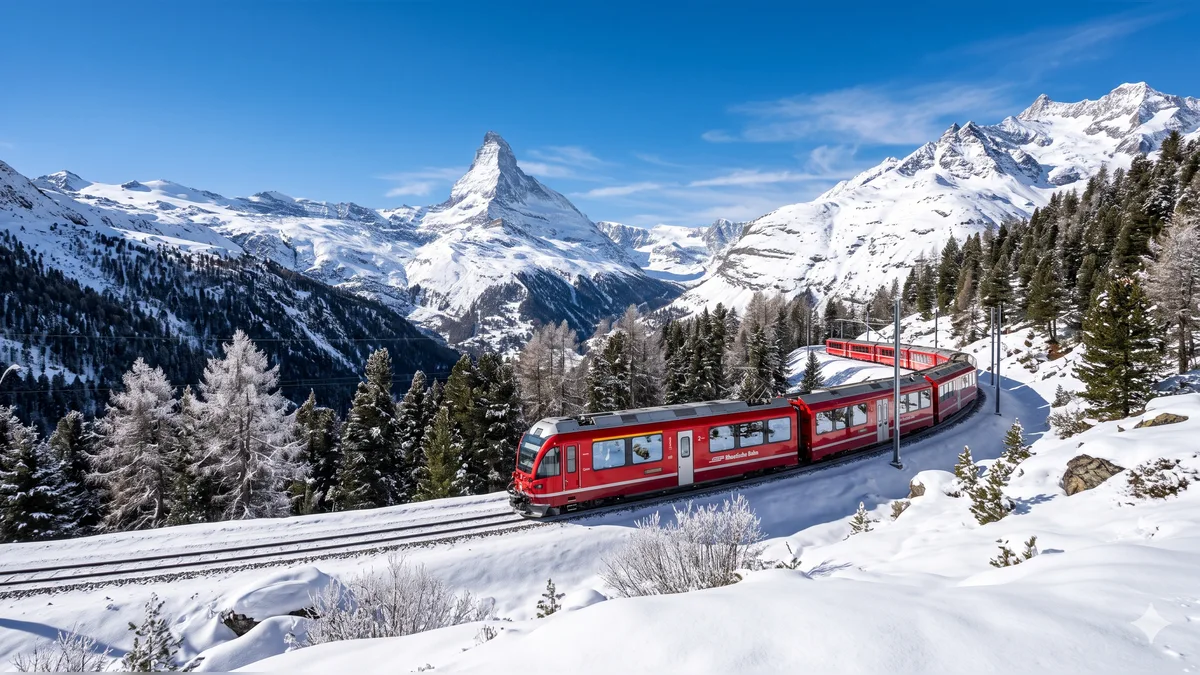
Switzerland is one of those destinations that exceeds expectations. Snow-capped peaks, turquoise lakes, charming villages, and one of the world’s most efficient rail networks make it an unforgettable first trip. This 7-day itinerary helps you experience Switzerland’s highlights without unnecessary backtracking or rushed sightseeing.
This Switzerland itinerary is designed for first-time visitors who want a balanced mix of iconic sights, authentic local experiences, and practical logistics. Whether you’re traveling as a couple, with family, or solo, this route covers the highlights while leaving room for spontaneous detours.
Prices here are estimates. Always verify current rates before booking.
Quick Travel Snapshot
| Detail | Info |
|---|---|
| Duration | 7 Days |
| Best Season | June–September, December–February |
| Best For | First-time visitors, couples, families |
| Currency | Swiss Franc (CHF) |
| Language | German, French, Italian, Romansh |
| Visa | Schengen Visa (check your nationality) |
| Budget Range | CHF 200–500/day per person |
| Transport | Swiss Travel Pass recommended |
| Capital | Bern |
Best Time To Visit
Summer (June–September) is the most popular season. Hiking trails are fully open, lake swimming is possible, and all mountain railways operate. Expect crowds and higher prices.
Winter (December–February) suits skiers and those wanting Christmas market magic. Zermatt and Verbier offer world-class slopes.
Shoulder seasons (April–May, October) offer fewer crowds and lower prices, but some mountain lifts may be closed.
Avoid late November — many Alpine attractions pause between seasons.
Travel Tip: June and September usually offer the best balance of pleasant weather, open attractions, and manageable crowds.
How To Reach Switzerland
Most international travelers fly into Zurich Airport (ZRH) or Geneva Airport (GVA). Both airports connect directly to city centers by train within 10–15 minutes.
Flight prices vary considerably by season, so comparing fares before booking can often save money, especially during summer.
After landing, booking an airport transfer in advance makes reaching your hotel easier, especially after a long flight.
To stay connected throughout your trip without roaming charges, Compare travel eSIM plans before your trip.
Where To Stay
Switzerland accommodation ranges from budget hostels to five-star mountain lodges. Book early in summer — popular destinations like Zermatt and Interlaken sell out months ahead.
Compare hotels, apartments, and guesthouses to find the best accommodation for your trip.
Zurich — Stay in the Altstadt (Old Town) or Kreis 4 for easy access to restaurants and trams.
Lucerne — The Old Town area puts you within walking distance of the Chapel Bridge and lake ferries.
Interlaken — Interlaken Ost district is ideal for families and adventure travelers accessing Jungfraujoch. If you’re relying on trains, staying near Interlaken Ost Station makes day trips much easier.
Zermatt — A car-free village. Book centrally to avoid long walks with luggage on arrival.
Geneva — The Paquis neighborhood offers good value and is within walking distance of Lake Geneva and the Old Town.
*For a full hotel guide by budget level, [see our Switzerland Hotels Guide →] [INTERNAL_LINK_1]*
Transportation Guide
The Swiss Travel Pass covers unlimited travel on trains, buses, and boats across Switzerland. It also includes free entry to over 500 museums and discounts on many mountain railways, making it an excellent choice for first-time visitors.
Planning to explore multiple Swiss cities? This pass can save you both time and money by covering most trains, buses, boats, and many museums. Before booking, read our Complete Swiss Travel Pass Guide to compare pass options, prices, and decide whether it’s worth buying for your itinerary.
The Swiss Travel Pass is available for 3, 4, 6, 8, or 15 consecutive days, making it easy to match different trip lengths. An 8-day pass for adults costs approximately CHF 365–440. Compare train routes and fares before booking to find the most convenient connections for your trip. Swiss trains leave exactly on time. Arriving on the platform 5–10 minutes early helps avoid missing connections.
Key routes on this itinerary:
- Zurich → Lucerne: 50 minutes
- Lucerne → Interlaken: 2 hours
- Interlaken → Zermatt: 2.5 hours (via Spiez)
- Zermatt → Geneva: 3.5 hours
Switzerland’s trains are famously punctual. Download the official SBB Mobile app for live timetables, platform information, and real-time updates.
Top Things To Do in Switzerland
1. Jungfraujoch — Top of Europe
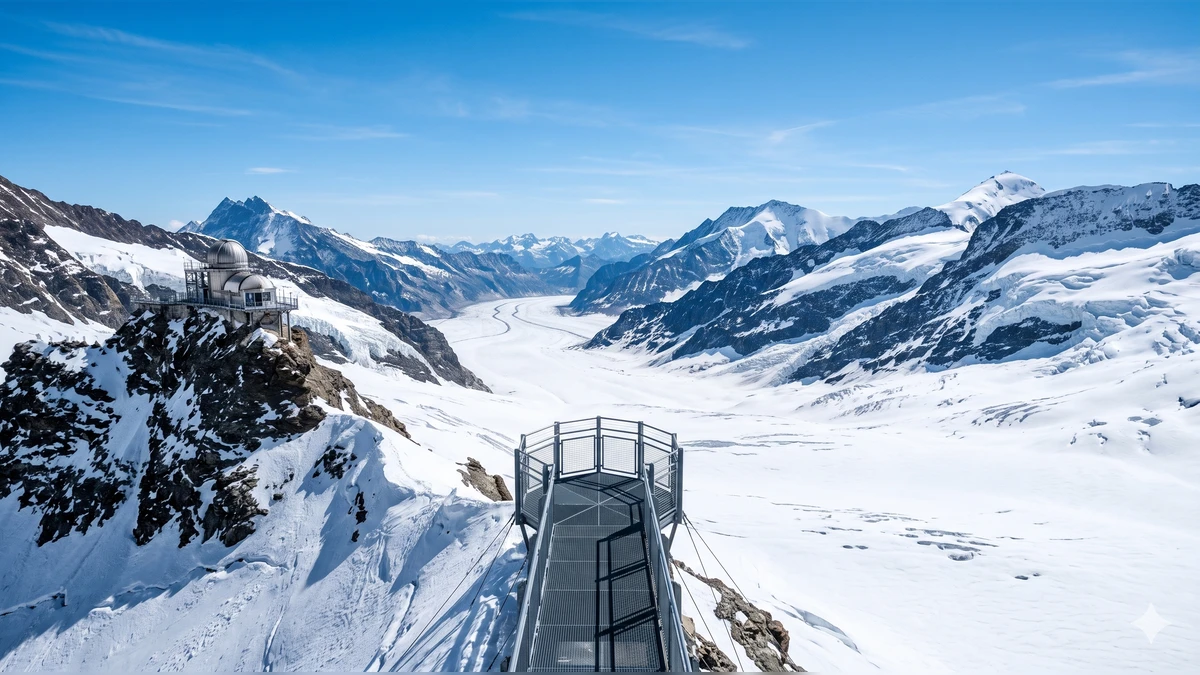
One of Switzerland’s most iconic experiences, Jungfraujoch sits at 3,454 meters and offers spectacular views of the Aletsch Glacier and surrounding Alpine peaks.
Best For: Families, couples, and first-time visitors
Time Needed: Full Day
Travel Tip: Take an early morning train for the best visibility before afternoon clouds develop.
Book attraction tickets at least 2–4 weeks in advance if you’re traveling during summer.
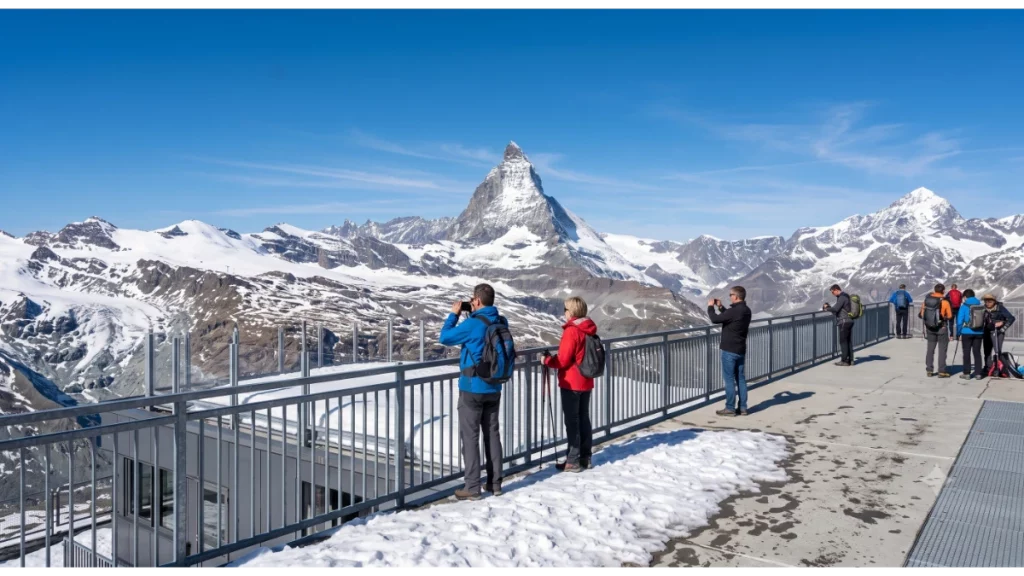
2. Matterhorn Glacier Paradise
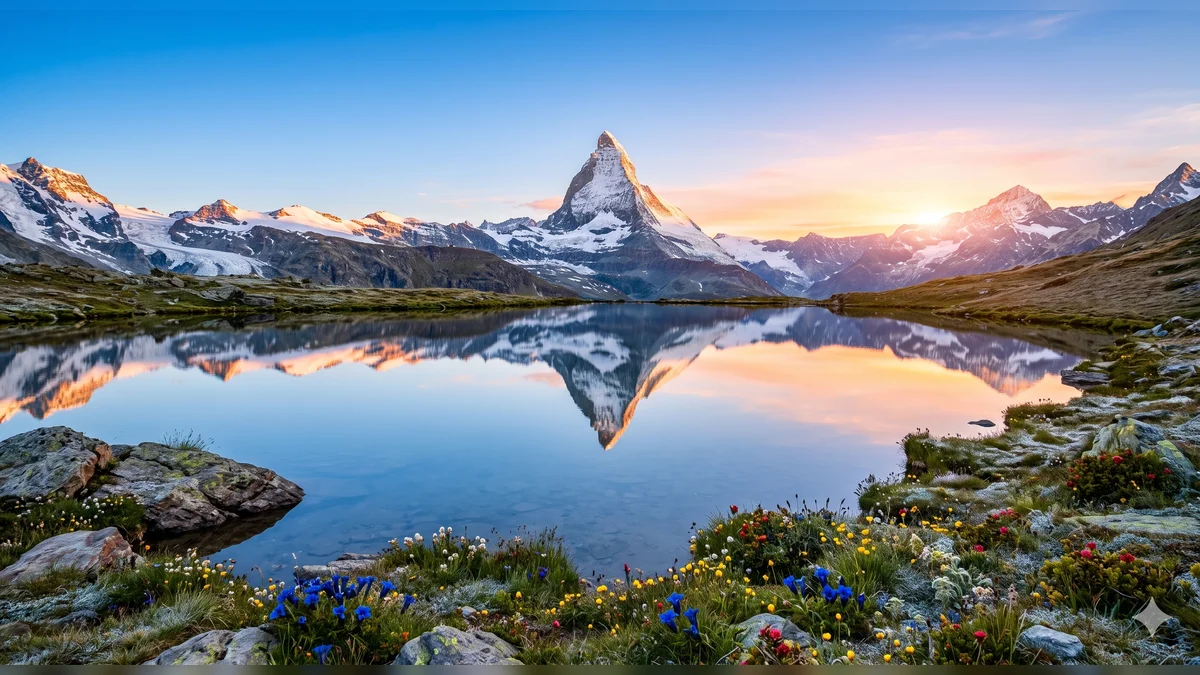
Ride Europe’s highest cable car to Matterhorn Glacier Paradise (3,883 m) for breathtaking panoramic views across Switzerland, Italy, and France.
Travel Tip: The first cable car of the day usually offers the clearest mountain views before afternoon clouds develop.
3. Chapel Bridge, Lucerne
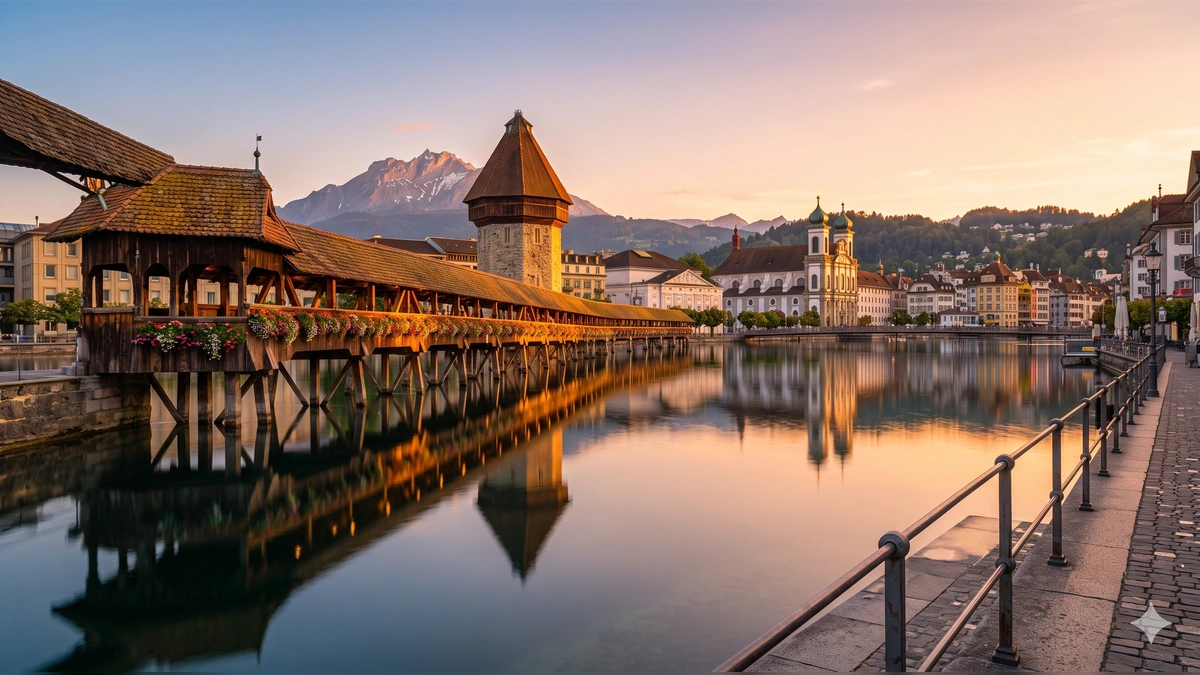
Europe’s oldest wooden covered bridge (1333) is free to walk across. Visit early in the morning when the bridge is quieter and the lake reflections are at their best. Combine with a boat trip on Lake Lucerne. Don’t miss the painted wooden panels beneath the roof, which illustrate scenes from Lucerne’s history.
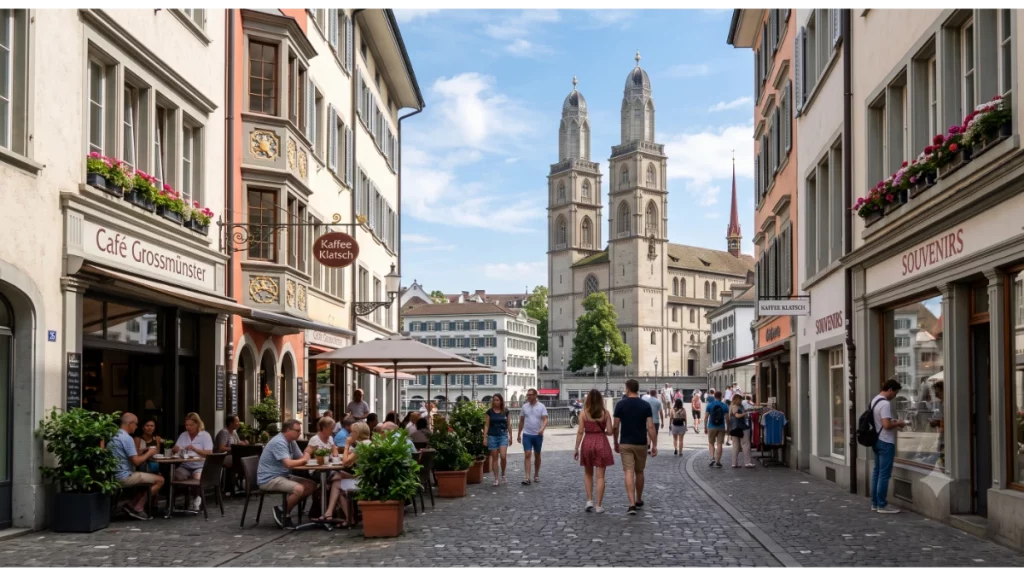
4. Old Town Zurich (Altstadt)
Explore cobblestone lanes, visit Grossmünster Cathedral, and browse the Niederdorf quarter. Relax at one of the riverside cafes while enjoying your first day in Switzerland.
5. Rhine Falls, Schaffhausen
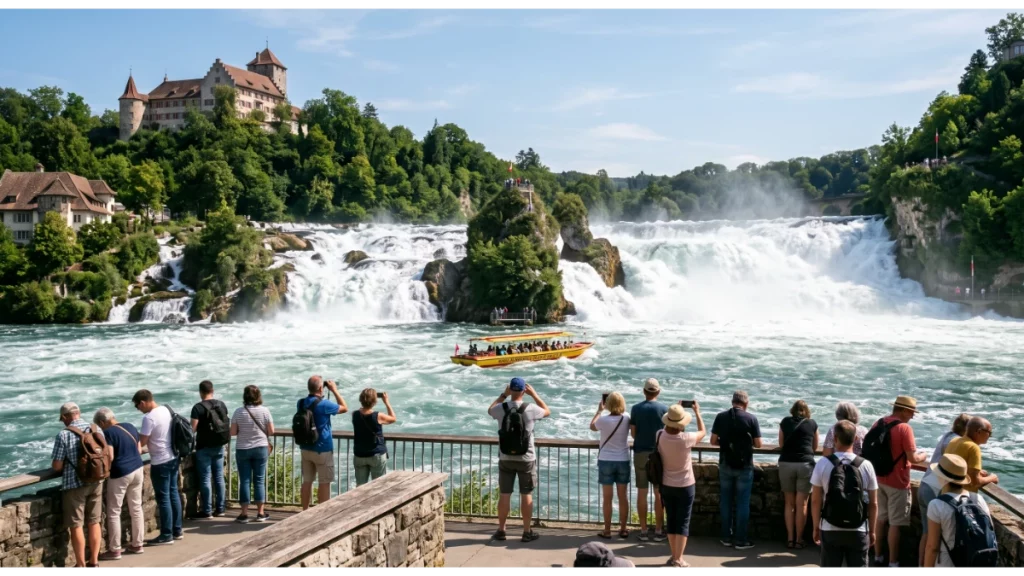
Europe’s largest waterfall is just 45 minutes from Zurich by train. Boat rides take you close to the falls for CHF 8–12. Arrive before late morning for smaller crowds and better access to the viewing platforms. Boat rides operate seasonally, so check schedules if traveling during spring or late autumn. The viewing platforms closest to the waterfall offer the best views but become busiest around midday during summer.
7-Day Switzerland Itinerary
Day 1 — Zurich: Arrival & Old Town
Arrive at Zurich Airport and take the train directly to the city center (10 minutes, covered by Swiss Travel Pass).
Spend the afternoon exploring Altstadt. Walk along the Limmat River, visit Grossmünster Cathedral, and browse the boutiques on Niederdorfstrasse. In the evening, enjoy a traditional Swiss cheese fondue at a local riverside restaurant.
Don’t miss: The view from Lindenhügel hill overlooking the old town — it’s free and spectacular.
Day 2 — Zurich: Day Trip to Rhine Falls
Take the morning train to Schaffhausen and visit Rhine Falls. Boat trips take you close enough to feel the spray from Europe’s largest waterfall.
Return to Zurich by early afternoon. Visit the Landesmuseum (Swiss National Museum) for context on Swiss history before departure tomorrow. Free entry with the Swiss Travel Pass.
Day 3 — Lucerne: Lakes & Chapel Bridge
A 50-minute train ride brings you to Lucerne. Drop your bags and walk straight to Chapel Bridge — the morning light is perfect.
Take a lake cruise on Lake Lucerne in the afternoon (covered by Swiss Travel Pass). For an optional upgrade, ride the cogwheel railway up Mount Pilatus — the view over the lake and Alps is extraordinary.
Hidden gem: The covered Spreuerbrücke bridge nearby is less photographed but equally historic and almost always crowd-free.
Day 4 — Interlaken & Bernese Oberland
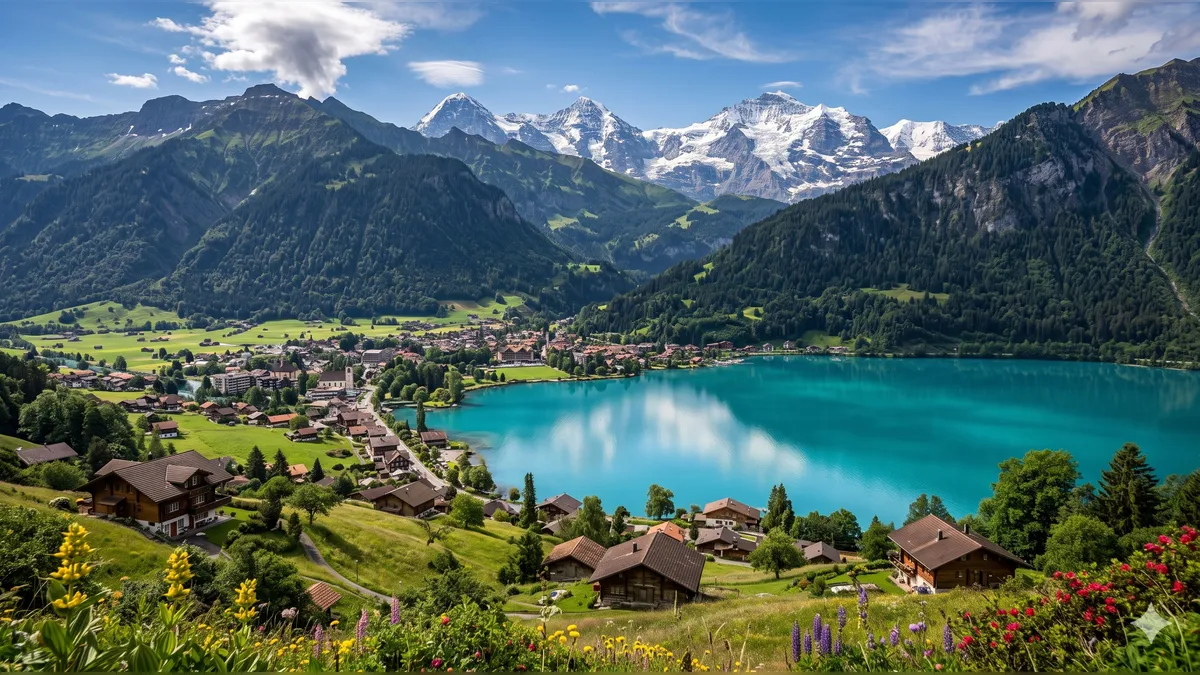
Travel to Interlaken via the scenic lake route through Brienz. Check in and head straight to the Harder Kulm viewpoint by funicular (CHF 32 return). The panoramic view of Interlaken between two lakes with the Alps behind is the classic Swiss postcard shot.
Explore Unterseen, Interlaken’s charming old village, where quieter streets and traditional Swiss buildings offer a more relaxed atmosphere than the main tourist area.
Day 5 — Jungfraujoch: Top of Europe
This is the big day. Take the early morning train from Interlaken Ost to Jungfraujoch. Allow 2.5 hours each way. At the summit, visit the Ice Palace, walk the Plateau, and admire the Aletsch Glacier.
Return by 3pm. If skies remain clear, spend a few extra minutes on the outdoor viewing platform before boarding your return train. Visibility often changes quickly in the Alps.
Day 6 — Zermatt & The Matterhorn
Travel to Zermatt (car-free village). Arriving by train feels like stepping into an Alpine fairy tale.
Start early to enjoy clearer mountain views before afternoon clouds begin forming. Take the cable car to Matterhorn Glacier Paradise for views of the iconic peak. Afternoon: Walk the Gorner Gorge trail — free, dramatic, and far less crowded than the mountain stations.
In the evening, take time to stroll along Bahnhofstrasse, Zermatt’s lively main street lined with cafes, boutiques, and mountain restaurants.
Day 7 — Geneva: Lake, Old Town & Departure
Train to Geneva takes 3.5 hours. Visit the famous Jet d’Eau fountain on the lake, then walk up to Vieille Ville (Old Town) to see St. Pierre Cathedral and the Reformation Wall.
Browse the Marche de Rive for local cheeses, chocolates, flowers, and seasonal produce.
Depart from Geneva Airport (15 minutes by train from city center).
Food Guide
Cheese Fondue — The Swiss national dish. Best enjoyed in Zurich or Lucerne at a traditional restaurant. Order a half-portion if you’re eating alone — it’s very filling.
Raclette — Melted cheese scraped over potatoes and pickles. Zermatt has exceptional raclette restaurants along its main pedestrian street.
Rösti — Swiss-style grated potato cake, served as a side dish everywhere. Try it at a mountain restaurant for the most authentic experience.
Swiss Chocolate — Visit a Läderach or Sprüngli shop in Zurich. Prices are high but quality is exceptional. Sprüngli’s Luxemburgerli macarons make an ideal edible souvenir.
Regional tip: In French-speaking Geneva, bakeries serve proper croissants and cafe culture shifts noticeably. Try a café complet (coffee with bread and jam) for a local breakfast experience.
Reservations are recommended for popular restaurants during summer weekends.
Budget Breakdown
| Category | Budget (CHF/day) | Mid-Range (CHF/day) |
|---|---|---|
| Accommodation | 80–120 | 180–300 |
| Food | 40–60 | 80–120 |
| Transport (pass) | ~50 | ~50 |
| Activities | 30–80 | 80–150 |
| Total | 200–310 | 390–620 |
The Swiss Travel Pass significantly reduces daily transport costs. Jungfraujoch and mountain excursions represent the biggest single-day expenses.
*For a full breakdown, [see our Switzerland Travel Budget Guide →] [INTERNAL_LINK_2]*
What To Pack
- Layers — Alpine weather changes rapidly even in summer
- Waterproof jacket — Essential year-round
- Comfortable walking shoes — Cobblestones in cities, trails in the mountains
- Power adapter — Switzerland uses Type J plugs
- Swiss Travel Pass or printed train tickets
- Sunscreen — UV levels are intense at altitude
- Portable Power Bank — Useful for long train journeys and full-day mountain excursions
Safety Tips & Local Scams
Switzerland is one of the safest countries in the world. Violent crime is extremely rare, and the public transport system is reliable and well-marked.
Practical safety tips:
- Mountain weather changes without warning. Always check forecasts before hiking and carry a rain layer.
- Altitude sickness is possible at Jungfraujoch (3,454m). Ascend slowly, stay hydrated, and descend if you feel unwell.
- Tap water is safe to drink everywhere in Switzerland — skip bottled water.
- Walking distances in mountain villages can be longer than they appear on maps. Wear proper shoes.
Scams to know:
- Unofficial taxi drivers at Zurich Airport sometimes quote inflated fares. Use the official taxi rank or pre-book transfers.
- “Free” bracelet or friendship ring vendors operate in tourist areas. Politely decline and keep walking.
Travel insurance is strongly recommended for medical emergencies and mountain rescue situations. To compare coverage options before departing, Compare travel insurance plans before departure.
FAQ
Is 7 days enough for Switzerland?
Yes, 7 days is enough to experience Switzerland’s highlights comfortably. This itinerary covers Zurich, Lucerne, Interlaken, Zermatt, and Geneva — the most iconic destinations. You won’t see everything, but you’ll leave with a thorough understanding of what makes Switzerland special.
Is Switzerland expensive for tourists?
Switzerland is one of Europe’s most expensive destinations. Budget travelers can manage on CHF 200/day by staying in hostels, cooking occasionally, and using the Swiss Travel Pass to eliminate per-journey transport costs. Mid-range travelers should expect CHF 400–600/day including accommodation and activities.
Do I need the Swiss Travel Pass?
For a detailed comparison of pass options, prices, and savings, read our Complete Swiss Travel Pass Guide.
What language is spoken in Switzerland?
Switzerland has four official languages: German (spoken in Zurich, Lucerne, Interlaken, Zermatt), French (Geneva, Lausanne), Italian (Lugano), and Romansh (parts of Graubünden). English is widely spoken in tourist areas across all regions.
When should I book Jungfraujoch tickets?
Book at least 2–4 weeks in advance in summer (June–August). The excursion is the most popular single attraction in Switzerland and morning departures sell out quickly. Check cancellation policies in case of poor weather days.
Is Switzerland family-friendly?
Extremely. Swiss trains accommodate strollers easily, many mountain attractions have family ticket discounts, and the Rhine Falls, lake cruises, and Jungfraujoch are spectacular for children. Families should note that Zermatt is car-free, so pack light or arrange electric taxi transfers from the train station.
Key Takeaways
- Buy the Swiss Travel Pass before arrival — it covers trains, buses, boats, and museums for one flat price.
- Book Jungfraujoch tickets in advance, especially for summer travel.
- Start in Zurich, end in Geneva for the smoothest logical route with no backtracking.
- Pack layers regardless of season — Alpine weather is unpredictable at any elevation.
- Budget CHF 200–600/day depending on accommodation and mountain excursion choices.
Final Verdict
This 7-day Switzerland itinerary gives first-time visitors a complete, balanced experience without overwhelming you with too many destinations.
From Zurich’s urban sophistication to Zermatt’s car-free Alpine charm, each day builds naturally on the last. The Swiss rail system makes everything seamless, and the Swiss Travel Pass removes daily transport stress entirely.
Switzerland isn’t the cheapest destination in Europe, but few countries match its combination of spectacular scenery, efficient transport, safety, and unforgettable mountain experiences. With good planning, this 7-day itinerary offers excellent value for first-time visitors.
For related planning, [see our Switzerland Travel Tips for First-Time Visitors →] [INTERNAL_LINK_3] and [Best Swiss Alps Hiking Trails →] [INTERNAL_LINK_4].
Ready to Plan Your Switzerland Trip?
Ready to plan your Switzerland adventure? Compare flight prices, book your hotel, reserve popular attractions, and if you’re still deciding about rail travel, read our Swiss Travel Pass: Complete Guide for First-Time Visitors (2026).
💡 Travel Tip
Book hotels in Interlaken and Zermatt at least 2–3 months in advance if you’re traveling during June–September, as accommodations fill up quickly.
Note: Prices and schedules mentioned in this guide are estimates based on available information. Always verify current rates directly with providers before booking.